
Starting freelancing for beginners often looks exciting at first.
You see people online talking about freedom, working from home, and making money on your own terms. It feels like a simple path learn a skill, find clients, and start earning.
But once you actually begin, things don’t always go as expected.
Many beginners quickly realize that freelancing is not as easy as it seems. You might spend hours learning, applying, and trying… but still struggle to get your first client or see real progress.
This is the part most people don’t talk about.
In this article, we’ll look at the real freelancing reality for beginners the challenges, the expectations vs reality, and what you should truly be prepared for before starting your journey

Quick Reality: Is Freelancing Easy for Beginners?
Freelancing is not as easy as it looks online.
While it’s possible to build a successful freelance career, most beginners experience a slow and sometimes frustrating start. Getting your first client, building trust, and understanding how platforms work all take time.
Many people assume that once they learn a skill, clients will come quickly. In reality, freelancing is not just about skills it’s also about positioning, communication, and consistency.
For example, even if you create a profile on platforms like Upwork or Fiverr, it doesn’t guarantee immediate results. You still need to stand out, build credibility, and understand what clients are actually looking for.
If you’re new, it’s worth understanding how to approach these platforms strategically. You can explore this in Upwork vs Fiverr for beginners to see how each one works differently.
In short, freelancing is possible — but it’s not instant. It requires patience, learning, and continuous improvement.
Expectation vs Reality in Freelancing
One of the biggest challenges beginners face is the gap between what they expect and what actually happens.
Expectation: “I’ll start earning quickly”
Many beginners believe that once they learn a skill, they can start earning within days or weeks. This idea is often shaped by success stories shared online.
Reality: Building trust takes time
In reality, clients don’t hire based only on skills. They look for reliability, communication, and proof that you can deliver results. As a beginner, you usually don’t have reviews or a strong portfolio yet which makes the process slower.
That’s why many freelancers spend weeks (or even months) trying before landing their first client.
If you’re struggling with this stage, it helps to understand how clients evaluate freelancers. This guide on how to get your first freelance client explains the process in more detail.
Expectation: “Freelancing means freedom”
Freelancing is often associated with flexible schedules and working from anywhere. While this is true in the long term, it doesn’t always feel that way at the beginning.
Reality: You handle everything
As a freelancer, you are responsible for everything finding clients, communicating, delivering work, and managing your time. There is no manager, no fixed structure, and no guaranteed income.
This can feel overwhelming at first, especially if you’re not used to working independently.
Expectation: “Good work is enough”
Many beginners think that doing good work will automatically bring more clients.
Reality: Visibility matters as much as skill
Even if you have strong skills, clients need to find you first. This is why positioning, profile quality, and communication play a major role in freelancing success.
For example, creating a clear and professional profile can significantly improve your chances. You can learn more in how to create a freelance profile that attracts clients.
Why Freelancing for Beginners Feels So Hard
If freelancing feels harder than you expected, you’re not doing something wrong — you’re experiencing a stage that most beginners go through.
The problem is not just lack of skills. In many cases, beginners struggle because they are entering a system they don’t fully understand yet.
You’re learning multiple things at once
Freelancing is not just about doing the work.
At the same time, you are trying to:
- learn a skill
- understand client expectations
- improve communication
- figure out where to find opportunities
This creates a situation where progress feels slow, even if you are improving.
You don’t have proof yet
Clients don’t just look for skills they look for evidence.
As a beginner, you don’t have:
- reviews
- completed projects
- strong portfolio
This makes it harder to compete, even if you are capable of doing the work.
You’re competing without positioning
Most beginners try to do “everything” instead of focusing on a clear direction. This makes it difficult for clients to understand:
👉 what you do
👉 who you help
👉 why they should choose you
Without clear positioning, even good freelancers struggle to get attention.
You expect fast results in a slow system
Freelancing rewards consistency, not speed. Many beginners expect quick results, but the system works differently:
- trust builds slowly
- visibility takes time
- opportunities grow gradually
Understanding this changes how you approach the process.
The Part No One Talks About
There’s something most beginners don’t expect when they start freelancing:
The hardest part is not learning the skill.
It’s dealing with uncertainty.
At the beginning, you’re often working without clear feedback. You don’t know if you’re improving, if your approach is right, or if your effort will lead to results.
And that creates a constant feeling of doubt.
Progress feels invisible
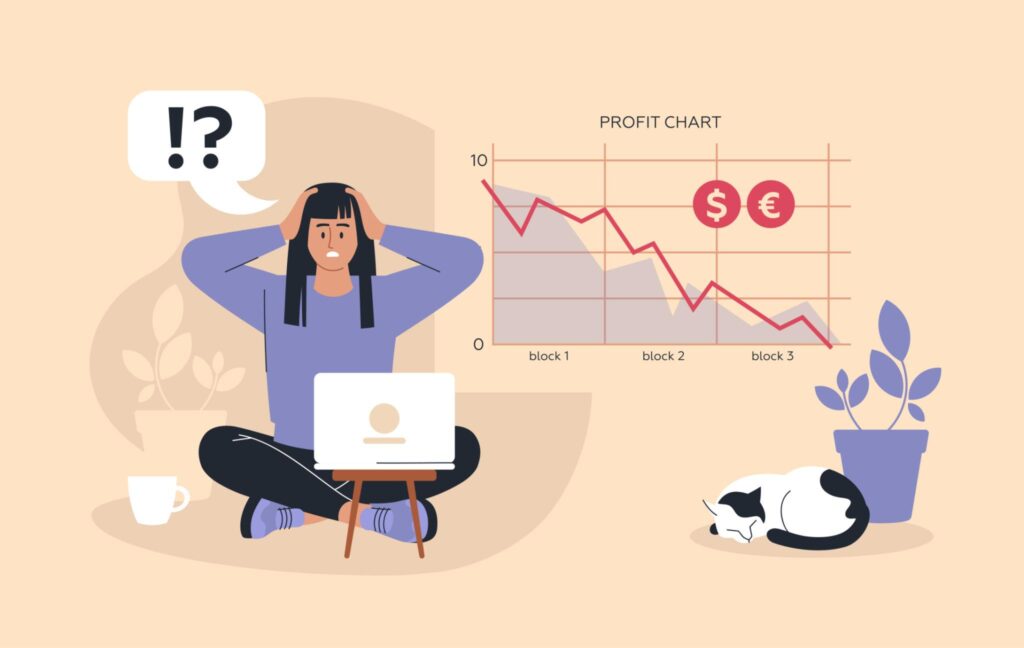
Let’s say you spend a week learning a skill maybe design, writing, or programming. You improve. You understand more. You feel more confident. But when you try to apply for work… nothing happens.
No replies. No results. So you start thinking: “Did I waste my time?”
In reality, you didn’t. But freelancing doesn’t give immediate feedback like school or a job. Your progress is real it’s just not visible yet.
Rejection is silent (and confusing)
Imagine this:
You find a project. Then you spend time understanding it. After that, a thoughtful message is written. Finally, you click “send”…And then: nothing. No reply. No feedback. No explanation.
This is one of the most frustrating parts of freelancing.
It’s not even rejection it’s silence.
And silence makes you question everything:
- Was my message bad?
- Am I not good enough?
- Did I choose the wrong skill?
But the truth is, many times it has nothing to do with you.
Clients may:
- hire someone quickly
- receive too many applications
- or simply not respond
You start comparing yourself to others

While you’re struggling, you see others online saying:
“I got my first client in 3 days” or “I made my first $500 this week” . And naturally, you start comparing. You think:
“Why is it working for them but not for me?”
What you don’t see is:
- how long they struggled before
- what experience they already had
- or what they’re not sharing
You question your decision
After some time, it becomes heavier.
Many beginners have spent time learning. In some cases they’ve tried applying, and then they’ve stayed consistent…
But results are still slow.
And then the thought comes:
“Maybe freelancing is not for me.”
This is one of the most common turning points. Not because people can’t succeed but because they expected a clearer, faster path.
The reality: It’s a phase, not a failure
What most beginners don’t realize is this: This stage is part of the process. It’s the transition between:
- learning → understanding
- understanding → results

The problem is not freelancing itself. The problem is expecting visible success too early. Once you understand this, everything changes. You stop measuring success by immediate results and start focusing on long-term progress.
Conclusion
Freelancing is often presented as a simple path learn a skill, find clients, and start earning. But as you’ve seen, the reality is more complex. The beginning is slow. Progress is not always visible. And uncertainty can make even small steps feel difficult. This doesn’t mean freelancing isn’t worth it. It means that success in freelancing comes from understanding the process, not rushing it.
Once you stop expecting immediate results and start focusing on consistent improvement, things begin to change. What feels confusing at the start becomes clearer. What feels difficult becomes manageable. And most importantly, you begin to see progress even if it’s small.
Freelancing is not about quick wins. It’s about staying long enough to understand how it really works.
FAQ
Freelancing can feel difficult at the beginning because there is no clear structure, and results are not immediate. Most beginners face a period of learning , uncertainty, and slow progress before seeing results.
There can be several reasons, including lack of visibility, limited proof (like reviews or portfolio), or not fully understanding how clients make decisions. It’s a normal stage that improves with time and experience.
It depends on consistency and approach. Some beginners start seeing results in a few weeks, while for others it may take months. Freelancing is a long-term process, not a quick result system.
Yes, freelancing can be rewarding over time, but it requires patience, persistence, and continuous improvement. The early stage is often the most challenging.